Introduction:
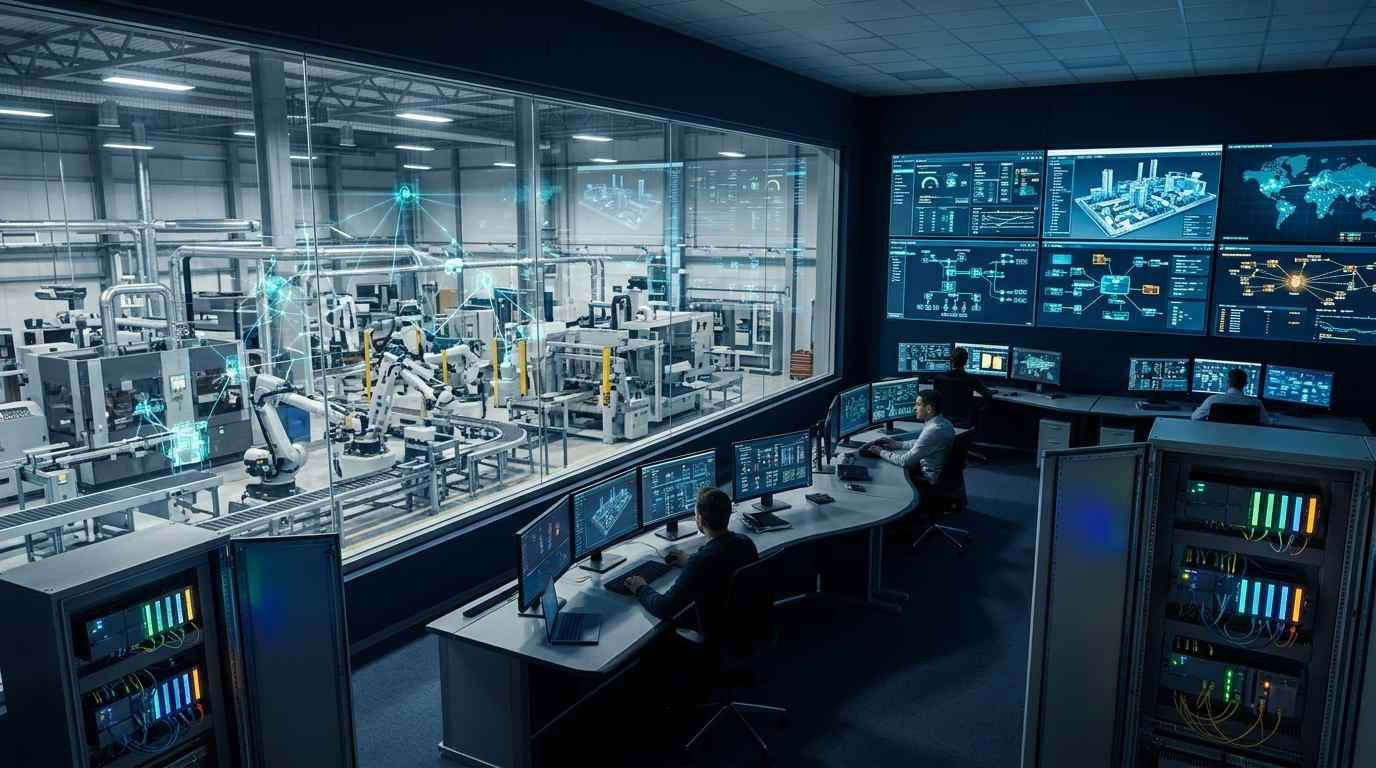
Understanding what is OT technology helps business owners, engineers, and technology professionals learn how industrial systems operate and why protecting them is essential. Unlike traditional information technology, which mainly manages data and business applications, operational technology interacts directly with physical equipment and processes.
In this guide, you will learn what operational technology is, how it works, common OT devices, the differences between IT and OT, and the cybersecurity practices organizations can use to protect industrial systems.
What Is Operational Technology (OT)?
Operational technology (OT) refers to hardware and software used to monitor, control, or interact with physical equipment, processes, and environments. It is commonly used in industrial facilities, manufacturing plants, power stations, water treatment facilities, and commercial buildings.
For example, a factory may use sensors to measure the temperature of a machine. A programmable logic controller processes those measurements and adjusts the equipment when necessary. Operators can monitor the process through a control interface.
Operational technology connects digital systems with real-world activities. It helps organizations automate repetitive tasks, monitor equipment performance, maintain operating conditions, and improve process reliability.
Why Is Operational Technology Important?
Operational technology helps businesses manage physical processes more efficiently and consistently.
Its main benefits include:
- Improved efficiency: Automated systems perform repetitive tasks with less manual intervention.
- Better monitoring: Sensors and control systems provide information about equipment performance.
- Increased reliability: Monitoring can help identify equipment problems before they cause major disruptions.
- Enhanced safety: Properly designed controls can detect abnormal conditions and activate protective responses.
- Resource management: Automated processes can help manage electricity, water, materials, and equipment usage.
However, OT systems must be configured and maintained correctly. Equipment failures, incorrect control settings, or cybersecurity incidents can interrupt production and sometimes create physical safety risks.
What Are Some Examples of Operational Technology?
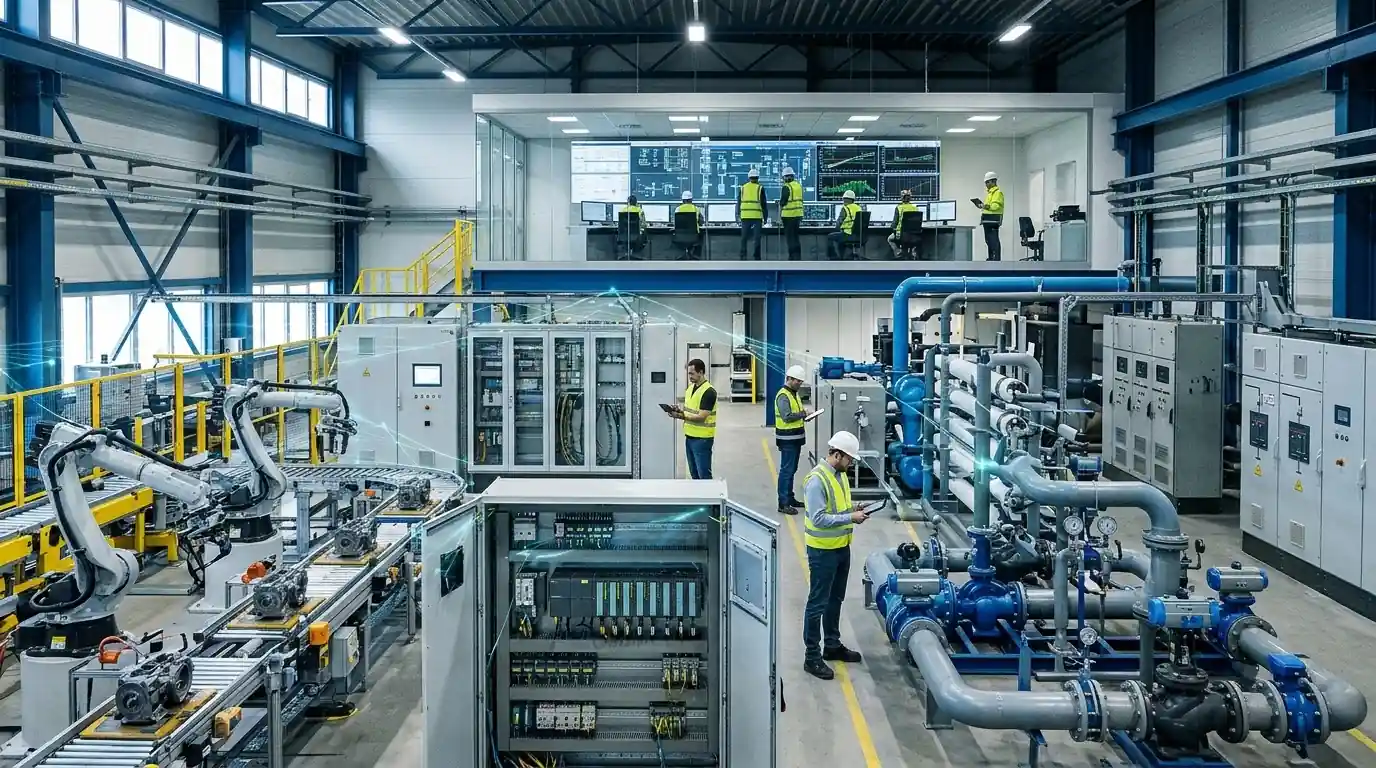
Operational technology is used in many industries. Its specific applications depend on the physical processes an organization needs to monitor or control.
1. Manufacturing and Industrial Automation
Manufacturing facilities use OT to control assembly lines, packaging machines, industrial robots, conveyor belts, and production equipment.
For example, an automated packaging line may use sensors to detect products and a controller to coordinate machinery. If a safety sensor detects an obstruction, the control system may stop the relevant equipment according to its configured safety requirements.
2. Energy and Electricity Systems
Power stations and electrical substations use operational technology to monitor equipment, supervise electrical processes, and support electricity distribution.
Control systems help operators observe operating conditions and identify abnormal events that require investigation.
3. Water and Wastewater Treatment
Water treatment facilities use OT to monitor tank levels, operate pumps, control valves, and manage treatment processes.
Automated monitoring helps operators maintain process conditions and respond when measurements move outside acceptable limits.
4. Building Automation Systems of What Is OT Technology
Commercial buildings use OT to manage heating, ventilation, air conditioning, lighting, and selected building safety functions.
These systems can help facility managers monitor environmental conditions and manage equipment according to building requirements.
5. Transportation Infrastructure
Railway signaling, traffic management systems, and airport infrastructure may use OT to monitor and control physical operations.
Because failures can have serious consequences, these systems require careful engineering, maintenance, and safety management.
What Are OT Devices?
OT devices are hardware or software components that monitor, control, or interact with physical equipment. They work together to collect information, process control instructions, and carry out actions.
Programmable Logic Controllers (PLCs)
A programmable logic controller is an industrial computer designed to control machinery and automated processes.
PLCs receive input from sensors, execute programmed instructions, and send commands to equipment. They are commonly used in manufacturing, packaging, and industrial automation.
Supervisory Control and Data Acquisition (SCADA)
SCADA systems allow operators to monitor and supervise industrial processes, including equipment distributed across different locations.
They collect information from field devices and present it through operator interfaces. Utilities may use SCADA to monitor remote pumping stations, electrical infrastructure, and water distribution networks.
Distributed Control Systems (DCS)
Distributed control systems manage complex processes using multiple interconnected controllers. They are frequently used in industries that require continuous process monitoring, such as chemical manufacturing and power generation.
Sensors and Actuators
Sensors measure physical conditions such as temperature, pressure, flow, vibration, and position.
Actuators perform physical actions, such as opening a valve, moving a component, or adjusting equipment. Together, these devices allow automated systems to observe and influence physical processes.
Human-Machine Interfaces (HMIs)
An HMI provides a visual interface through which operators can view equipment status, monitor measurements, review alarms, and interact with industrial control systems.
Remote Terminal Units (RTUs)
RTUs collect data from field equipment and communicate with monitoring or supervisory systems. They are useful in geographically distributed infrastructure, including electrical substations and water networks.
Not every industrial environment uses all these devices. The required components depend on the application, operational risks, and control system design.
How Does an OT Network Work?
An OT network connects industrial devices, controllers, monitoring systems, and operator workstations so they can exchange information and coordinate physical operations.
A typical process follows these steps:
- Measurement: A sensor measures a physical condition, such as temperature or pressure.
- Communication: The measurement is transmitted to a controller.
- Processing: The controller evaluates the measurement using programmed instructions.
- Control: The controller sends an appropriate command to an actuator or machine.
- Monitoring: An HMI or SCADA system displays the process information to operators.
- Response: Operators or automated control functions respond when conditions require attention.
For example, a water treatment facility may use a level sensor to measure the amount of water in a storage tank. A controller can use that measurement to manage a pump according to configured operating rules.
An industrial network may contain PLCs, sensors, actuators, communication gateways, SCADA servers, operator consoles, and industrial switches.
Some OT networks use Ethernet and Internet Protocol-based communications, while others rely on specialized industrial protocols. Network design must account for compatibility, reliability, and the consequences of communication failures.
What Is the Difference Between IT and OT?
Information technology (IT) and operational technology (OT) serve different purposes, although modern organizations often connect them.
IT primarily manages information, digital communications, business applications, and data storage. OT primarily monitors and controls physical equipment and industrial processes.
| Factor | Information Technology (IT) | Operational Technology (OT) |
|---|---|---|
| Main purpose | Manage business information | Control physical processes |
| Common devices | Computers, servers, laptops | PLCs, sensors, actuators |
| Typical environment | Offices and data centers | Factories, utilities, industrial facilities |
| Main concerns | Data confidentiality and availability | Safety, reliability, and availability |
| Maintenance | Often follows standard IT update schedules | Requires operational risk assessment |
| Downtime impact | Business service disruption | Potential production or physical disruption |
| Security measures | Access control, endpoint protection, network defense | Segmentation, monitoring, controlled access, safe maintenance |
Both IT and OT need strong cybersecurity. However, an OT security decision must consider physical safety and operational continuity alongside information protection.
Why Do IT and OT Teams Need to Work Together?
Businesses increasingly connect industrial systems to enterprise networks, analytics platforms, and remote maintenance services.
These connections can improve visibility and operational efficiency, but they may also introduce additional cybersecurity risks.
IT teams bring expertise in identity management, enterprise networks, and security monitoring. OT engineers understand industrial equipment, process behavior, and operational requirements.
Working together helps organizations approve network connections carefully, control remote access, coordinate updates, and establish effective incident response procedures.
What Is OT in Cybersecurity?
OT cybersecurity involves protecting operational technology systems, industrial control equipment, and related networks against unauthorized access, malicious activity, and accidental disruption.
An OT security incident can affect more than digital information. Depending on the system, it may interrupt manufacturing, damage equipment, disrupt essential services, or create physical safety risks.
The National Institute of Standards and Technology (NIST) provides guidance for securing operational technology and industrial control systems in its Special Publication 800-82 Revision 3.
Common OT Cybersecurity Risks
Organizations should understand several common risks.
Unauthorized access: Attackers or unapproved users may gain access to industrial control systems.
Ransomware: Malicious software may disrupt connected workstations, servers, or production operations.
Legacy equipment: Older devices may lack modern security features or receive limited vendor support.
Unsafe remote access: Poorly protected remote connections can expose industrial systems to unauthorized activity.
Unpatched vulnerabilities: Known security weaknesses may remain unresolved because updates require compatibility testing.
Misconfiguration: Incorrect network rules or access permissions can create unnecessary exposure.
Supply-chain risks: Third-party software, maintenance devices, or vendor connections may introduce security weaknesses.
The seriousness of these risks depends on the equipment, network architecture, existing safeguards, and possible operational consequences.
Best Practices for OT Cybersecurity
Organizations can improve OT cybersecurity by applying multiple protective measures.
- Maintain an asset inventory. Identify industrial devices, controllers, software versions, network equipment, and system owners.
- Segment industrial networks. Restrict unnecessary communication between enterprise IT systems and operational environments.
- Secure remote access. Use approved access methods, strong authentication where supported, limited permissions, and appropriate monitoring.
- Monitor network activity. Investigate unusual connections, unexpected devices, and suspicious communications.
- Manage updates carefully. Test patches where practical and coordinate changes with operations and engineering teams.
- Maintain backups. Protect important configurations and software, and test recovery procedures.
- Train employees. Help engineers, operators, contractors, and security personnel understand their responsibilities.
- Prepare incident response plans. Establish clear procedures for investigation, escalation, safe isolation, and system restoration.
Never change or disconnect critical industrial equipment simply to test a security measure without appropriate authorization and engineering review.
How to Choose OT Security Solutions
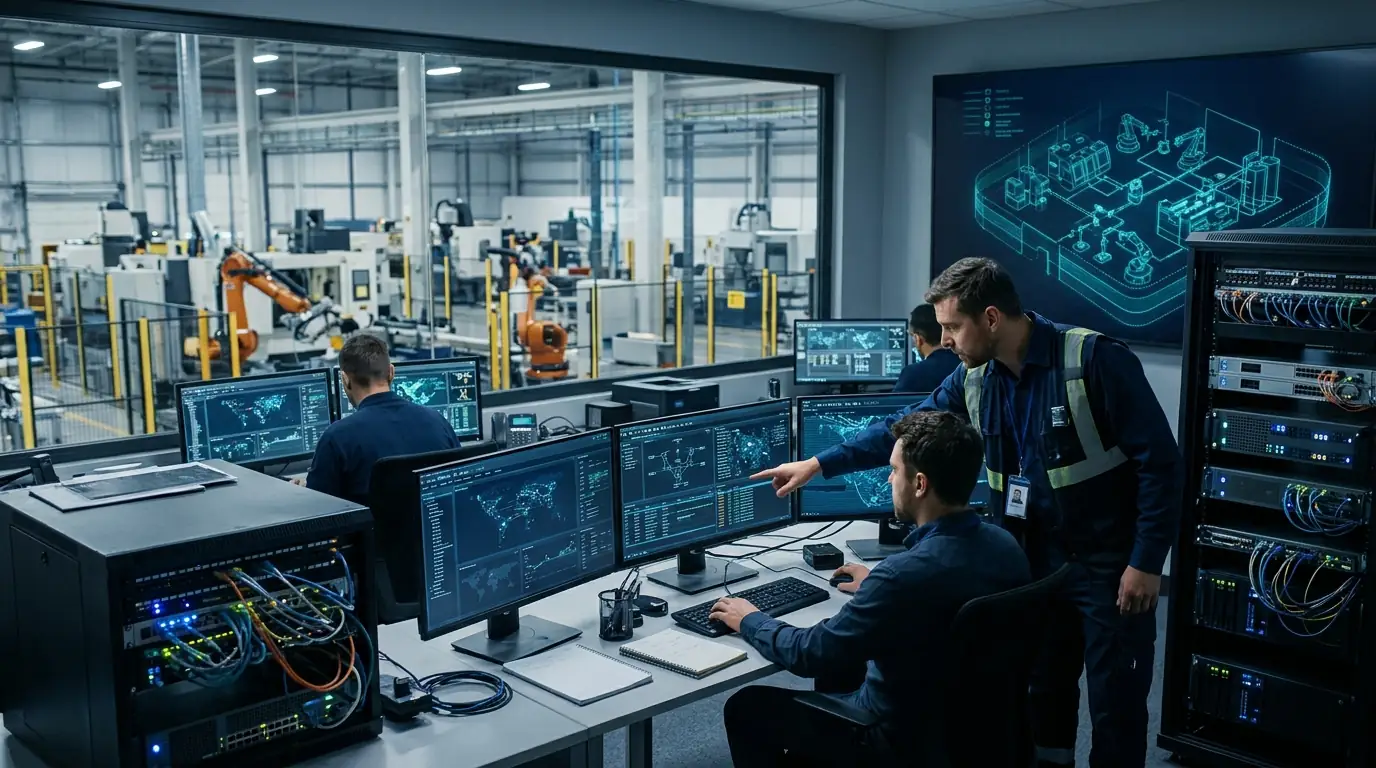
Organizations evaluating OT security software, monitoring tools, or professional services should focus on operational requirements rather than marketing claims.
Consider these factors when comparing solutions:
- Asset discovery: Can the solution identify relevant devices and communication relationships?
- Protocol compatibility: Does it support the industrial protocols used by your equipment?
- Monitoring capabilities: Can it identify unusual network behavior without unnecessary operational disruption?
- Integration: Can it work with existing security monitoring and incident response processes?
- Deployment requirements: Can it be implemented safely within the current industrial environment?
- Vendor experience: Does the provider understand industrial control systems and operational constraints?
- Total cost: Consider licensing, implementation, training, maintenance, and ongoing support.
Comparing OT Security Approaches
| Approach | Suitable Use | Main Consideration |
|---|---|---|
| OT asset discovery software | Identifying connected industrial devices | Verify device and protocol coverage |
| Industrial firewalls | Controlling network communication | Rules must reflect operational needs |
| OT network monitoring | Detecting unusual communications | Alerts require investigation |
| Managed security services | Obtaining external monitoring and expertise | Review provider access and responsibilities |
| OT security assessments | Identifying and prioritizing weaknesses | Findings should be practical and risk-based |
The cost of OT security depends on the number of sites, equipment complexity, licensing, implementation requirements, and support arrangements. Organizations should obtain site-specific quotes instead of relying on generic price estimates.
Security software can support an OT security program, but it cannot replace sound engineering, access management, network segmentation, or tested recovery procedures.
How to Implement an OT Security Program
Organizations can improve industrial security through a structured approach that prioritizes critical systems and avoids unnecessary disruption.
Step 1: Identify Critical Equipment
Create an inventory of controllers, operator workstations, SCADA servers, network gateways, and other important assets.
Document their purpose, ownership, software versions, support status, and dependencies wherever possible.
Step 2: Map Network Connections
Identify which devices communicate with one another and which systems connect to enterprise networks or external services.
Document approved remote access and investigate unnecessary connections.
Step 3: Assess Risks
Evaluate vulnerabilities according to their potential consequences, exposure, and existing protective measures.
Prioritize issues that could affect safety, essential services, or critical production processes.
Step 4: Introduce Protective Controls
Implement appropriate access restrictions, network segmentation, monitoring, backup procedures, and change management.
Test proposed changes where practical and coordinate deployment with responsible engineers.
Step 5: Prepare for Incidents
Define who will investigate alerts, authorize containment measures, communicate with stakeholders, and restore affected systems.
Include engineering, operations, IT, security, management, and relevant vendors in suitable exercises.
Step 6: Review and Improve
Regularly review asset inventories, security alerts, access permissions, backup tests, and unresolved risks.
Repeat assessments when equipment, suppliers, network connections, or operating conditions change.
A practical starting point is to select one critical production area, document its assets and connections, and agree on a manageable set of security improvements.
Common OT Security Mistakes to Avoid
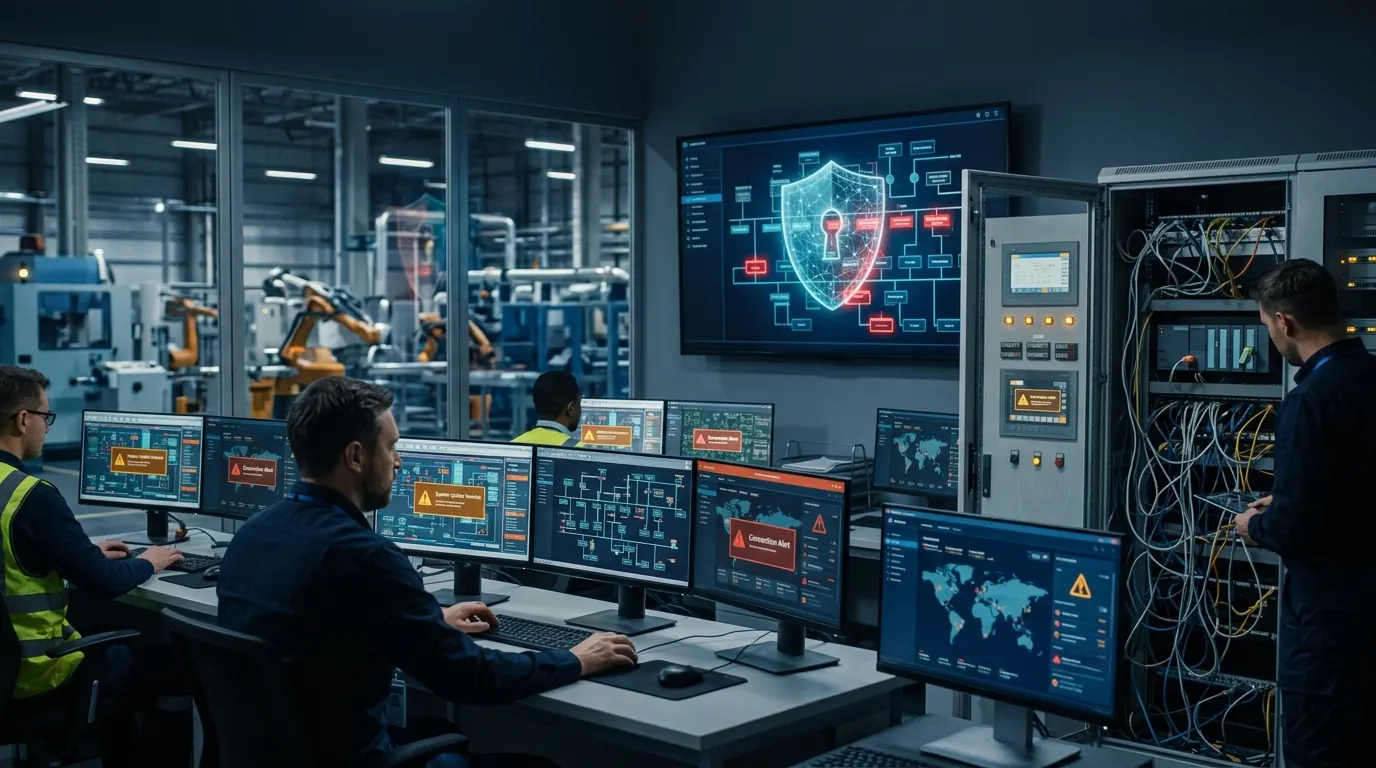
Treating OT Like a Standard Office Network
Industrial equipment may require continuous operation and specialized software. Applying ordinary IT maintenance practices without considering operational requirements can cause disruption.
Better approach: Coordinate changes with OT engineers, evaluate physical consequences, and use approved maintenance windows.
Installing Updates Without Testing
A software update may introduce compatibility problems or affect systems that depend on specific versions.
Better approach: Evaluate the update, test it where feasible, follow vendor guidance, and document the decision. If patching must be delayed, consider compensating controls and a remediation plan.
Relying Only on Antivirus Software
Endpoint protection cannot address every risk associated with industrial networks, unauthorized access, or vulnerable controllers.
Better approach: Combine supported endpoint protection with network segmentation, access controls, monitoring, and recovery planning.
Assuming Disconnected Networks Are Completely Safe
Even isolated systems may be exposed through removable media, maintenance laptops, temporary connections, or third-party activities.
Better approach: Control physical access, manage removable media, and document approved data-transfer methods.
Ignoring Backup and Recovery Testing
A backup may be incomplete or impossible to restore when it is needed.
Better approach: Protect relevant configurations and software, verify backup integrity, and conduct authorized recovery exercises.
Frequently Asked Questions
1. What is operational technology (OT)?
Operational technology is hardware and software used to monitor or control physical equipment and industrial processes. Examples include PLCs, SCADA systems, industrial sensors, and building automation systems.
2. What are some examples of operational technology?
Examples include factory automation, electrical substation controls, water treatment equipment, industrial robots, building management systems, and railway signaling infrastructure.
3. What is the difference between IT and OT?
IT manages information and business applications, while OT monitors and controls physical equipment. OT security places particular emphasis on safety, reliability, and continuous operation.
4. What are OT devices?
OT devices include PLCs, sensors, actuators, RTUs, HMIs, and other components used to monitor or control physical processes.
5. What is OT in cybersecurity?
OT cybersecurity protects industrial systems and connected equipment against cyber threats, unauthorized access, and operational disruption through measures such as network segmentation, monitoring, access controls, and recovery planning.
Conclusion
Operational technology is essential to the systems that support manufacturing, utilities, transportation, buildings, and industrial processes. Understanding what is OT technology helps organizations recognize how controllers, sensors, networks, and monitoring systems work together.
The difference between IT and OT is especially important when planning cybersecurity because industrial environments must account for physical safety and operational continuity.
Businesses can begin improving OT security by identifying critical equipment, mapping network connections, assessing risks, and implementing practical safeguards. With careful planning and collaboration between engineering, operations, IT, and security teams, organizations can improve system visibility and resilience while reducing unnecessary operational risk.
